
UAE Visa Quotas in 2025: What Business Owners Must Understand

Introduction
The UAE visa quota system isn’t just a regulation, it shapes how businesses hire, expand, and manage their workforce. As we enter 2025, business owners planning a new business setup in the UAE or expanding existing operations need a clear understanding of how visa quotas apply.
Visa quotas determine how many foreign-employee (and certain other) residence/work visas your company can sponsor under its trade licence. They are a gating factor in hiring, operations, accounting, tax, and strategic planning.
In 2025, with evolving regulatory and Emiratization initiatives, visa quotas are becoming an increasingly important consideration for business owners. If you misjudge them, growth stalls; compliance risks rise; costs go up.
What are visa quotas, and why they matter in 2025
A visa quota is a ceiling set by government or free zone authorities on how many foreign employees (or sometimes investors/owners) a company can sponsor under its business licence.
It’s tied to variables like physical office space, licence type, business activity, sometimes company classification, compliance history, etc.
Why it’s critical now:
- The UAE’s regulatory environment is tightening: labour law, Emiratization, corporate tax, audits are more rigorous.
- Visa shortages cause delays in hiring, project fulfilment, and can affect contracts.
- Misaligned quotas can affect financial forecasting, payroll costs, housing allowances, etc.
- Free zones and mainland have different rules; picking the wrong jurisdiction or package can limit flexibility.
How visa quotas affect business owners (mainland and free zone)
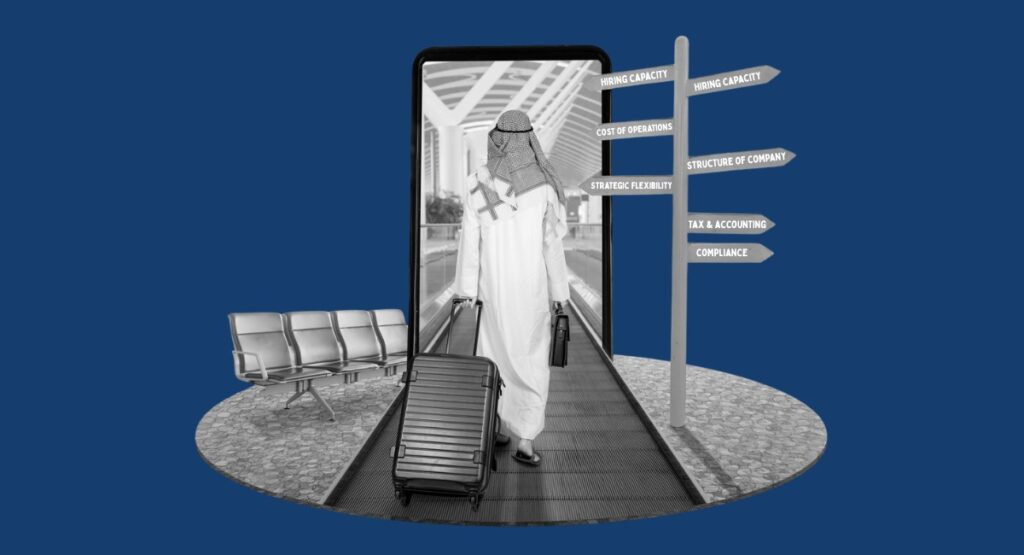
Here’s what visa quotas impact in practical terms:
- Hiring capacity: If your quota is low, you can’t hire above that legal limit. If you try, your visa applications will be rejected or delayed.
- Cost of operations: More visas means larger offices, more overhead (rent, utilities), compliance costs. Conversely, small quotas may push you to outsource or rely on remote/freelance work, which has its own risks.
- Structure of company: Whether to set up in the mainland or in a free zone, whether to rent a small office, flexi-desk, serviced office, affects quota.
- Tax & accounting compliance: Visa counts can be one piece of evidence of ‘substance’ for Free Zone Persons, the UAE corporate tax guidance for free-zone persons requires adequate assets, full-time employees, and operating expenditures in the free zone to qualify for preferential tax treatment.”
- Strategic flexibility: If you foresee growth (new contracts, scaling teams), having room to increase quota (or choosing structures that allow it) becomes part of your planning.
Current UAE visa quota landscape (2025 update)
Here are commonly observed patterns and indicative ranges reported by businesses and free zone authorities One caveat: on many points the government hasn’t made blanket numbers public, so what you see often depends on free zone authority or emirate.
Free Zones
Visa quotas in free zones are tied to the office space you lease (UAE Government Portal – Recruiting in free zones).
Typical allocations:
- Flexi-desk → up to 2–3 visas
- Serviced office → 4–5 visas depending on size
- Physical space → about 1 visa per 9 m²
- Each free zone sets its own policy, and allocations may vary. High-demand zones (Dubai, Abu Dhabi, Sharjah) often apply stricter rules due to space and infrastructure limits.
These ranges vary by free zone, for example, DMCC, IFZA, and SHAMS each apply different space-to-visa ratios and policies.
Mainland (MOHRE, GDRFA, etc.)

On the mainland, visa quotas and work permits are administered by MOHRE in coordination with local economic departments. Residency stamping is handled by the emirate’s immigration authority (e.g. GDRFA in Dubai) (MOHRE, GDRFA Dubai).
While not codified in law, many authorities use the ‘1 visa per 9 m²’ rule as a guideline when assessing quota requests.
Other prerequisites include:
- Valid lease contract (Ejari in Dubai)
- Valid trade licence
- No outstanding violations
- Wage Protection System (WPS) compliance
Regulatory / policy changes in last 12-18 months
- Emiratization expansion: The new Emiratization requirement applies to private sector companies in designated sectors with 20–49 employees, as per MOHRE guidelines. Companies with 50+ employees must continue increasing UAE national skilled employee share annually (UAE Government Portal – Emiratization).
- Dubai Executive Council Resolution No. 11 of 2025: Under Executive Council Resolution No. 11 of 2025, Dubai-based free-zone companies may apply for permits from the Department of Economy and Tourism (DET) to operate on the mainland, provided they maintain separate approvals and financial records.
- More enforcement: Authorities increasingly reject quota increases if office space is inadequate or compliance history is poor.
Key regulatory considerations
- Emiratization penalties: If criteria not met, companies may face fines or restrictions on visas. The requirement is now enforced, not just aspirational.
- Labour law changes:The UAE Labour Law (Federal Decree-Law No. 33 of 2021, amended by Decree-Law No. 20 of 2023) remains the federal framework for employment; recent amendments under Federal Decree-Law No. 20 of 2023 strengthened dispute resolution and enforcement provisions in the UAE Labour Law (Federal Decree-Law No. 33 of 2021).”
- Hybrid licenses / cross-jurisdiction licensing: With free zone companies being allowed to have mainland operations (per the Dubai resolution), there are new requirements around having separate financial records, separate approvals, possibly different quotas under mainland rules.
Visa quotas & Business Setup Options

Here’s how visa quotas differ for mainland vs free zone, what you need to check, how to pick:
| Feature | Free Zone Setup | Mainland Setup |
| Initial visa quota | Limited, tied to office type (flexi-desk, serviced office, physical space). Free zone authority is defined. | Permission via MOHRE + local economic department; need to satisfy space, office lease, licence type. |
| Flexibility to scale visas | Must upgrade office space or move office to increase quota; requests to free zone authority. Some free zones have cap/peak zones. | Can apply for increase via MOHRE; larger office space, licence renewals, proof of business growth help. Also, compliance history matters. |
| Costs & overhead | Office upgrades, licence renewals, free zone fees. Possibly lower overhead if small. | Higher cost for leased full offices, compliance, Emiratization, local fees, renewed inspections. |
| Market access & regulation | Free zones often have restrictions on trading in the UAE mainland without a partner or distributor; local licensing may be needed under mainland rules. | Full access to the local market, government contracts, no intermediary needed. Quota visible in visa-based labour capacity. |
Strategic considerations for business owners
What you should think through strategically:
- Forecast your staffing needs: what’s the headcount in 1 year, 2 years? Factor in visa processing time.
- Choose office size & licence type accordingly: If you foresee hiring 10-20 people, a flexi-desk won’t cut it. Choose physical space with legal lease, so you can apply for enough visas.
- Pick right jurisdiction: if you need flexibility, full access to the local market, or sizable workforce, Mainland may serve better; free zones give speed and simplicity if the workforce is small, clients mostly outside UAE, or remote operations.
- Compliance track record matters: staying clean in renewals, paying WPS, avoiding fines, paying labour obligations, meeting Emiratization obligations. These build trust and smooth out quota increases.
- Company Evaluation, ICV (In-Country Value) Certification, and Liquidation:
- ICV: ICV scoring is relevant primarily for companies supplying goods or services to ADNOC and other participating entities. If quota prevents enough local content or staffing, ICV suffers.
- Business Evaluation / Valuations: Investors will check whether operations are scalable; quota limits can be a red flag or cap valuation.
- Company Liquidation: If closing operates, eliminating unused visa quota, cancelling visas, handling final liabilities (sponsor visa costs etc.) is part of the process.
Risks & costs to watch
- Applying for visas beyond quota → rejections, delays, wasted fees.
- Overestimating quotas → leasing larger premises too early, paying more rent than needed.
- Under-estimating compliance costs (health insurance, visa renewal, documentation).
- Non-compliance with Emiratization → fines, inability to get new quotas or work permits.
- Free zone rules differ widely; what works in DMCC may not in another free zone. Hidden fees (office upgrades, permit renewals) must be accounted for.
Action plan: what business owners should do now
Here’s a practical checklist for understanding and managing your company’s visa quota obligations.
| Step | What to do | Who to involve | Timeline / Priority |
| 1. Assess current licence & quota | Find out how many visas you’re currently allowed vs used. Check office size, lease contract. | Company management, operations team, PRO / legal advisor. | Immediate (within 1-2 weeks). |
| 2. Forecast staffing needs | Estimate growth over 12-24 months. Include local hiring (Emiratization) obligations if applicable. | CFO, HR, business planning. | Within the same month. |
| 3. Check jurisdiction rules | If in a free zone: check free zone authority’s rules (visa per m², flexi-desk vs physical office). If mainland: check MOHRE + local economic department + GDRFA for your emirate. | Business Setup consultant, legal advisor. | Month 1. |
| 4. Ensure compliance & clean records | Pay all fees, avoid violations, ensure WPS compliance, license renewals, no pending fines. A good compliance profile helps when requesting higher quotas. | Accounting/Tax Consultant, Legal, CFO. | Ongoing. |
| 5. Plan space & lease accordingly | If your forecast needs more visas, secure a larger office (or negotiate flexible upgrades). Lease agreements must be valid, legal, with Ejari etc. | Real estate agent, company procurement. | Before hiring many staff. |
| 6. Apply for quota increases early | Don’t wait until you’re forced. Prepare justification (contracts, business case), then apply via MOHRE or free zone authority. | PRO / legal / setup services. | At least 1-2 months before needed hires. |
| 7. Engage advisers | Accounting / VAT / Tax Consultants, CFO Services, business setup firms who know local emirate and free zone regulations. They often know what quotas get approved and how. | External consultants; in-house if possible. | Always. |
| 8. Monitor regulatory changes | UAE changes rules reasonably frequently: Emiratization, labour law, free zone-mainland integration, corporate tax, etc. | Your legal/tax/HR teams. | Quarterly review. |
What business owners need to check with government bodies & documentation
- Ministry of Human Resources & Emiratisation (MOHRE): for work permit, visa quota approval, labour compliance.
- General Directorate of Residency & Foreigners Affairs (GDRFA) or equivalent in your emirate: for visa stamping, residency permits.
- Free Zone Authority (if in free zone): their specific visa quota policies, office-space-based allocation, upgrade pathways.
- Department of Economy, Municipality etc.: lease / tenancy contracts (Ejari), office classification, permitted business activities.
- Authorities dealing with Emiratization to ensure you’re meeting quotas for UAE nationals.
Documents to have ready: valid trade licence, valid lease contract (office space), establishment card, proof of rent, proof of business activity, employment contracts, proof of compliance (WPS, labour law), perhaps a business plan for expansion, proof of financial health.
Comparative view: UAE vs other GCC
While I don’t have recent official statistics that cover all neighbouring GCC countries in detail for visa quotas, from what business operators report:
- UAE is tighter than some (e.g. smaller GCC states) in terms of linking office-space to quota, and emphasizing compliance and Emiratization.
- Free zones in the UAE tend to offer more flexibility compared to similar economic zones elsewhere in GCC. But also, the costs for office space, permissions, and visa processing are higher.
- Other GCC countries may have fewer free zones, or less variation between jurisdiction types, so visa quota risk is lower simply because choices are fewer; but that also means less flexibility.
Conclusion: What’s Changing & Why Staying Ahead Matters
Here’s what’s shifting:
- Free zone entities are now more able to operate on the mainland under new licensing/permit regimes (e.g. Dubai’s Resolution No. 11 of 2025) which changes how quotas may apply.
- Emiratization obligations are stricter and enforced; firms not complying can lose visa permit privileges.
- Office-space-based quota allocations remain a strong lever; free zones and mainland both use this in practice.
- Authorities have stepped up checks, from MOHRE compliance reviews to tax guidance on free-zone substance and Dubai’s new oversight for free-zone mainland activity, increasing the likelihood of audits if quotas don’t match real operations.”
Staying ahead of visa quota policy gives you:
- Faster hiring for critical roles
- Lower risk of disruption (contracts, deliveries, recruitment)
- Less waste from overpaying for space or fees
- Better valuation if investors / auditors see compliance and capacity
- Competitive edge: businesses that can scale reliably while remaining compliant win more tenders, more contracts.
Disclaimer: This article is for general informational purposes only and does not constitute legal, tax, or business advice. Visa quota rules, labour regulations, and corporate tax obligations in the UAE are subject to change by government authorities. Business owners should consult directly with the Ministry of Human Resources & Emiratisation (MOHRE), General Directorate of Residency and Foreigners Affairs (GDRFA), relevant free zone authorities, or licensed legal and tax consultants before making decisions.
Sources & References:
- UAE Government Portal – Recruiting in free zones
- UAE Government Portal – Emiratization in the private sector
- MOHRE – Labour laws & regulations
- Federal Decree Law No. 33 of 2021 (as amended by Decree-Law No. 20 of 2023) – UAE Labour Law (via MOHRE)
- General Directorate of Residency and Foreigners Affairs (GDRFA Dubai) – Official portal
Federal Decree-Law No. 33 of 2021 (UAE Labour Law) — official text. UAE Legislation - Federal Decree-Law No. 20 of 2023 (amendments) — official PDF. UAE Government Portal
- Executive Council Resolution No. 11 of 2025 (Dubai) — official PDF. dlp.dubai.gov.ae
- Emiratisation (private sector) — UAE Government Portal (policy and 20–49 employee changes). UAE Government Portal
- Reed Smith Viewpoints – New era for free zone–mainland integration: Dubai’s Executive Council Resolution No. 11 of 2025
- Velocity Global – How to get a UAE work permit
- JB Consultants – Visa quotas in UAE free zones: 2025 updates and implications
- UAE Government Portal
- FTA UAE+
- Dubai Executive Council
- UAE Government Portal+1
- UAE Government Portal MOHRE+1
- viewpoints.reedsmith.com
- UAE Government Portal+1
- MOHRE+2DLA Piper+2
FAQ
1. What are the new rules for the UAE visa 2025?
In 2025, UAE visa rules have become more structured and compliance-focused. Key changes include stricter Emiratization requirements, private sector companies with 20–49 employees must hire at least one Emirati by the end of 2024 and a second by the end of 2025, while companies with 50+ employees must increase UAE national participation annually (UAE Government Portal – Emiratization).
Free-zone companies can now operate in Dubai’s mainland under Executive Council Resolution No. 11 of 2025, provided they maintain separate financial records and licenses.
Other updates reinforce that visa quotas are linked to office space, license type, and compliance history. Authorities increasingly reject quota increases if leases are invalid, past violations exist, or WPS obligations aren’t met (MOHRE).
2. What are UAE visa quotas for businesses in 2025?
A visa quota is the maximum number of visas a company can sponsor based on office space, licence type, and business classification. In 2025:
- Free zones: Flexi-desks allow 2–3 visas, serviced offices 4–5, and physical offices roughly 1 visa per 9 m² (UAE Government Portal – Recruiting in free zones).
- Mainland: Similar practice applies approximately 1 visa per 9 m² of office space, subject to MOHRE and local economic department approval (MOHRE).
Visa quotas are now treated as a strategic lever, they affect hiring, office planning, payroll budgeting, and compliance for corporate tax or Emiratization obligations.
3. How many visas can a UAE company sponsor in 2025?
There’s no one-size-fits-all number. The exact quota depends on:
- Office space and type (flexi-desk, serviced, physical)
- Business licence and activity
- Company location (mainland or free zone)
- Compliance history and regulatory status
For example, a small free-zone flexi-desk may allow 2–3 visas, while a medium-sized office of 100 m² could sponsor around 10–12 employees. Mainland offices follow similar “1 visa per 9 m²” benchmarks but require MOHRE and local authority approvals (UAE Government Portal).
4. How do free zone and mainland visa quotas differ in the UAE?
Here’s the practical difference:
- Free Zone: Quotas are tied to office space leased within the zone. Increasing quotas typically requires upgrading office size or switching to a larger package. Free zones often limit mainland market access unless additional licences/permits are obtained.
- Mainland: Quotas are governed by MOHRE in coordination with the emirate’s economic department. Companies generally have greater flexibility for growth, full market access, and quota increases depend on office space, compliance, and business activity.
Think of it as speed vs scale: free zones are fast and simple but capped; mainland allows growth but requires stricter compliance.
5. What is visa quota approval in the UAE?
Visa quota approval is the official authorization allowing a company to sponsor a certain number of foreign employees.
- For free zones, approval comes from the respective free zone authority based on your office type, lease, and licence (UAE Government Portal – Free Zones).
- For mainland companies, MOHRE and the local economic department review your office space, trade licence, Emiratization compliance, and WPS obligations before granting quota approval (MOHRE, GDRFA Dubai).
Approval isn’t permanent, it must be renewed with licence renewal or when expanding office space or workforce. Having a clean compliance record and up-to-date documentation makes approval faster and smoother.